
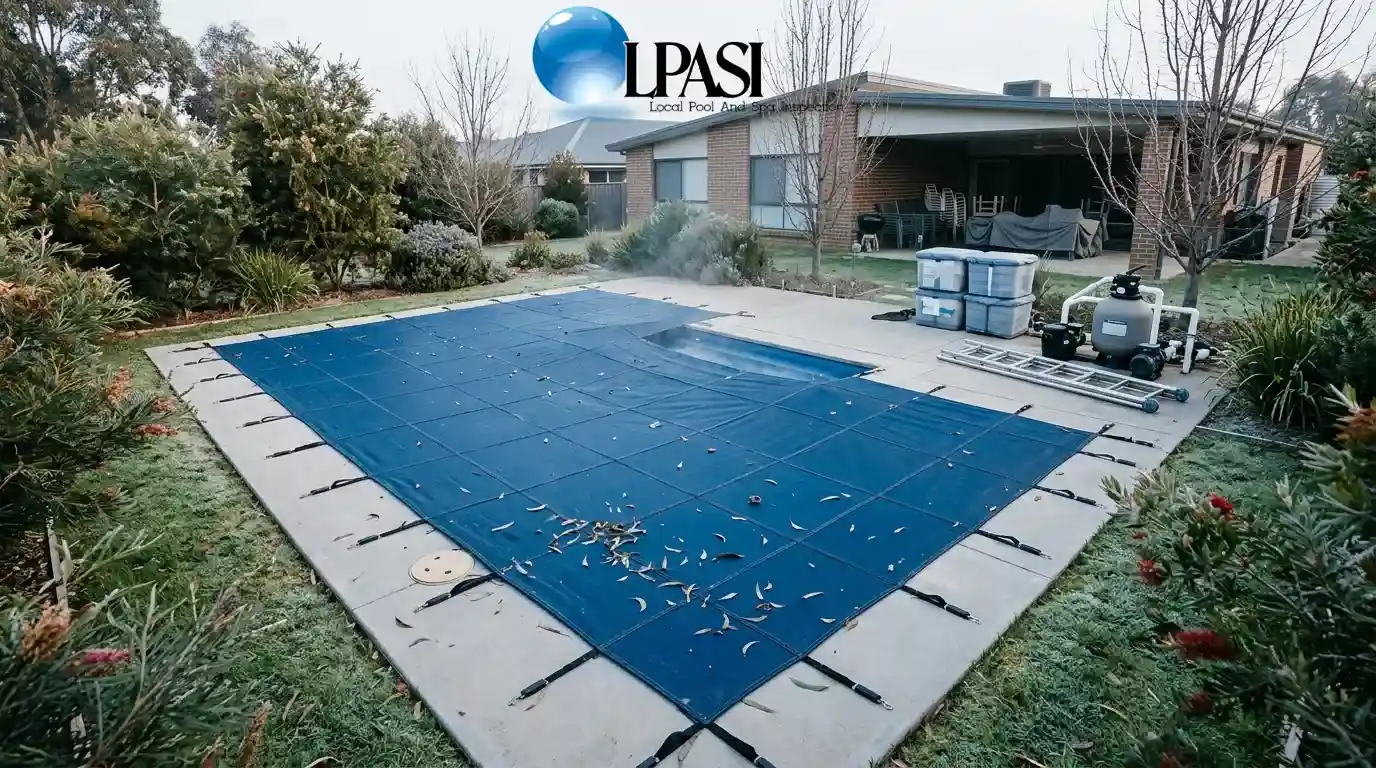
The complete winter pool maintenance checklist covers seven steps:
- A pre-winter clean of debris, baskets, and surfaces
- Balanced water chemistry before you cut back circulation
- Reduced filtration hours, not a full shutdown
- Protected plumbing and equipment in freezing regions
- A properly fitted, compliant pool cover
- Weekly or monthly monitoring through the cold months
- A clear reopening routine once spring arrives
Skip any of these, and you risk opening a stained, cloudy, or algae-filled pool once summer returns.
Many owners assume a closed pool needs no attention at all, and that assumption is what causes the damage.
Leaves rot in the skimmer, sanitizer drops too low, covers sag under standing water, and pipes crack in a cold snap nobody planned for.
The fix is a short, consistent routine built around your climate, and that is exactly what this guide walks you through.
This 10-step checklist for winterising a pool covers the basics, but the sections below go further into the mistakes that actually cost homeowners money – from skipping a pool fence inspection Melbourne owners often overlook to setting the wrong water level before a freeze or switching off a filter that should have kept running.
Why Winter Pool Care Still Matters When You Are Not Swimming
Skipping winter maintenance almost always creates a bigger problem at reopening than the pool ever had during summer.
The cost of fixing neglected water is usually higher than the cost of simple upkeep through the cold months.
Turning the filter off completely for three or four months is a false economy.
Industry body SPASA warns that this approach leads to more expensive repairs later, since the filter and pump still need to run to keep water balanced.
Left alone, decomposing leaves and dirt feed algae growth, and by the time spring arrives, the water can be murky and green.
The biggest risks over winter are algae blowouts, permanent staining, and equipment failure.
Leaves left sitting in the pool stain surfaces as they break down, while stagnant water gives algae a chance to take hold. Cold weather cuts swimmer numbers, but it does not remove the need for sanitizer, filtration, or the occasional check.
The idea that a closed pool needs zero attention is a myth.
Even a covered pool needs its chemistry checked and its cover inspected, because rain, dust, and shifting temperatures throw water balance off regardless of the season.
If you live somewhere that dips below freezing, this routine becomes even more important, since trapped water can crack pipes and damage equipment.
Your Pre-Winter Cleaning Checklist
A thorough clean before you scale back care sets your pool winterization checklist up for success.
Skipping this step means dirt and debris sit in the water for months, doing damage the whole time.
Start by clearing out all debris from the water, skimmer basket, and hair and lint pot.
Both SPASA and Poolwerx recommend emptying these baskets before winter, since decomposing organic material stains surfaces and feeds algae. Clean out any automatic cleaner bags or filters at the same time.
Brush the walls, floor, and waterline before you reduce your routine.
This removes biofilm, dirt, and early algae growth before it bonds to the surface and becomes harder to shift. Give extra attention to corners, steps, and shaded spots where water moves less.
Dry and store ladders, rails, toys, and any other removable accessories. This cuts down on rust and corrosion and keeps your pool area tidy over winter.
If an accessory already looks worn, replace it now rather than waiting for summer demand to hit.
Get Your Water Chemistry Right Before You Close Up
Balanced water before you cut back circulation is what keeps your pool stable through winter. Get this wrong, and you are likely to open a stained, cloudy, or scaled pool in spring.
SPASA recommends total alkalinity between 80 and 120 ppm and pH between 7.2 and 7.6, with chlorine kept at a usable level right through winter.
Staying inside this range keeps the water stable and lowers the risk of scale, staining, and cloudiness.
A winter shock treatment followed by a long-life algaecide is one of the most effective protective steps you can take. SPASA suggests a chlorine dose plus a winter algaecide built for longer-lasting protection, circulated through the system so it spreads evenly.
This gives your pool a stronger baseline heading into the coldest months.
Note: Cold water still needs sanitizer. This is one of the biggest misconceptions in winter pool care. Poolwerx makes clear that chlorine levels still need monitoring, because water stays vulnerable to algae if sanitiser drops too low.
Keep a low but steady level rather than letting the pool go untreated for weeks at a time.
Filter Pump and Plumbing Care That Protects Your Investment
Your filter and pump need attention through winter too, just less of it.
SPASA recommends thoroughly backwashing the filter and cleaning it with a proper filter cleaner and degreaser, then lubricating O-rings with a silicone-based lubricant.
This keeps water flowing properly and stops small seal problems from turning into leaks.
Do not shut filtration off completely unless your system has been fully winterised for freezing conditions.
Poolwerx recommends reducing run time instead of switching the pump off, suggesting around four to six hours a day so water keeps circulating. SPASA’s guidance sits close to this too, recommending two to three hours a day depending on your setup.
In areas where temperatures can drop below freezing, plumbing protection matters most of all. Drain equipment properly and clear water from lines so pipes and fittings do not crack overnight.
Finish by checking seals, O-rings, and lids for brittleness, since replacing a cheap part now can prevent a flooded equipment pad later.
Choosing and Maintaining a Compliant Pool Cover
As pool safety inspectors, we see the same winter shortcuts show up as compliance failures every reopening season.
Sagging covers, missed strap wear, and standing water on automatic systems are the ones that should have been caught months earlier.
The right cover depends on your climate and what matters most to you.
Mesh covers let rain pass through, solid covers block light and debris more completely, and automatic covers add convenience along with a strong safety barrier.
For most Australian homeowners, the choice comes down to how much debris you deal with, how much active upkeep you want, and your safety priorities.
Good installation matters as much as the cover itself. It needs to sit with even tension and secure fittings so wind and debris cannot pull it loose over time.
If you have an automatic cover, watch for standing water, since the extra weight can strain the system and create safety issues.
For safety covers, being ASTM compliant means the cover has passed testing against recognised safety standards, including load and access resistance.
In practical terms, that means the cover does more than keep leaves out. It also helps reduce the risk of someone accessing the pool by accident.
Check monthly for holes, gaps, strap wear, and any damage around the anchors or edges.
Automatic cover pumps need regular checks of their own. Standing water can cause sagging, put stress on the track or straps, and become a hazard if anyone steps onto the cover.
Clear debris from the pump monthly and confirm it is discharging correctly so the cover stays safe and functional.
How to Monitor Your Pool Through the Cold Months
A simple weekly check is enough for most pools, especially in mild or cool climates.
Look at water level, skimmer baskets, pressure gauge readings, and sanitizer levels, then clear any visible debris from the surface or cover.
Fully winterised or lightly used pools can often stretch to monthly checks, but they should never go completely unchecked.
Running your pool lights briefly each week is a small habit worth building.
It cuts down on condensation building up inside fittings and lets you spot early problems like clouding, leaks, or fixture damage before they get worse.
Weather monitoring also helps you stay ahead of sudden cold snaps.
Freeze alerts, smart controllers, or a weather app can tell you when to increase circulation or check equipment early. This matters most in inland and southern regions, where overnight temperatures can shift quickly.
Common Winter Pool Maintenance Mistakes to Avoid
Switching the pump off completely is the mistake we see most often.
Both Poolwerx and SPASA stress that water still needs circulation in winter, since stagnant water encourages algae and can lead to mechanical problems. Unless your system has been fully drained, keep it running on a reduced schedule.
Leaving last season’s chemicals in the shed until spring is another common trap.
Chemicals degrade, clump, or lose strength over time, so you may open your pool with products that no longer work properly. Store them somewhere cool, dry, and well ventilated, and replace anything that looks compromised.
Many owners also ignore the cover until reopening day.
Tears, gaps, loose straps, and standing water are far easier to fix early than after months of exposure. The same applies to water level. Too high or too low creates avoidable problems depending on your pool type and local climate.
Reopening Your Pool Next Spring
Clear water, normal pressure readings, minimal staining, and smooth equipment startup are all signs that your winter routine worked.
A bad smell, heavy algae, or noisy equipment usually means something was missed along the way.
Start your reopening checklist by removing and cleaning the cover, refilling to the proper level, reinstalling accessories, and cleaning out baskets and filters.
Test and balance pH, alkalinity, and chlorine before shocking the pool and brushing the walls and floor. Once the system is running smoothly, give it time to circulate properly before swimmers get back in.
Call a professional if the water is heavily green, the pump sounds abnormal, leaks appear, or you are unsure whether winter damage has occurred.
A clean, stable pool with healthy equipment is usually fine to handle yourself, but professional eyes can catch what a quick look misses. For homeowners weighing up whether their setup is right for the season ahead, browsing pool options built for family use or comparing lap pools against full-size pools is a useful starting point before making bigger equipment decisions.
If space is tight and you are considering a smaller footprint, a plunge pool built for compact backyards is also worth a look.
Frequently Asked Questions About Winter Pool Maintenance
Do I need to run my pool pump in winter?
Yes, just run it on a reduced schedule so the water keeps circulating and stays balanced.
What chlorine level should a pool be kept at during winter?
Keep a low but steady chlorine level and test it regularly rather than letting it drop to zero.
Can algae grow in a pool in cold weather?
Yes, algae can still take hold if circulation and sanitiser levels stay too low.
How often should I check on my pool during winter?
Check weekly for skimming, water level, and basic chemistry, then do a deeper check once a month.
Is it necessary to cover a pool in winter?
Yes, a cover keeps debris out and cuts down on maintenance, especially over long off-season stretches.
How long can a pool go without maintenance before it’s damaged?
Problems can start within weeks once circulation stops and debris or chemistry gets ignored.
What makes a pool safety cover ASTM-compliant?
It must meet ASTM F1346 requirements for load-bearing strength and access resistance. Note that ASTM F1346 is a US standard, in Victoria, pool barriers are assessed against AS 1926.1 instead.
Should I turn off my pool heater for winter?
Usually yes if the pool sits unused, but always check your equipment manual and local winterising guidance first.
How much does it cost to fix a neglected pool in spring?
Costs vary, but neglected pools often need extra cleaning, rebalancing, and sometimes equipment repairs, which is why winter care works out cheaper.
What’s the difference between winterizing and just closing a pool?
Winterizing fully protects your water, equipment, and cover, while just closing a pool often skips those steps and leaves it unprotected.