
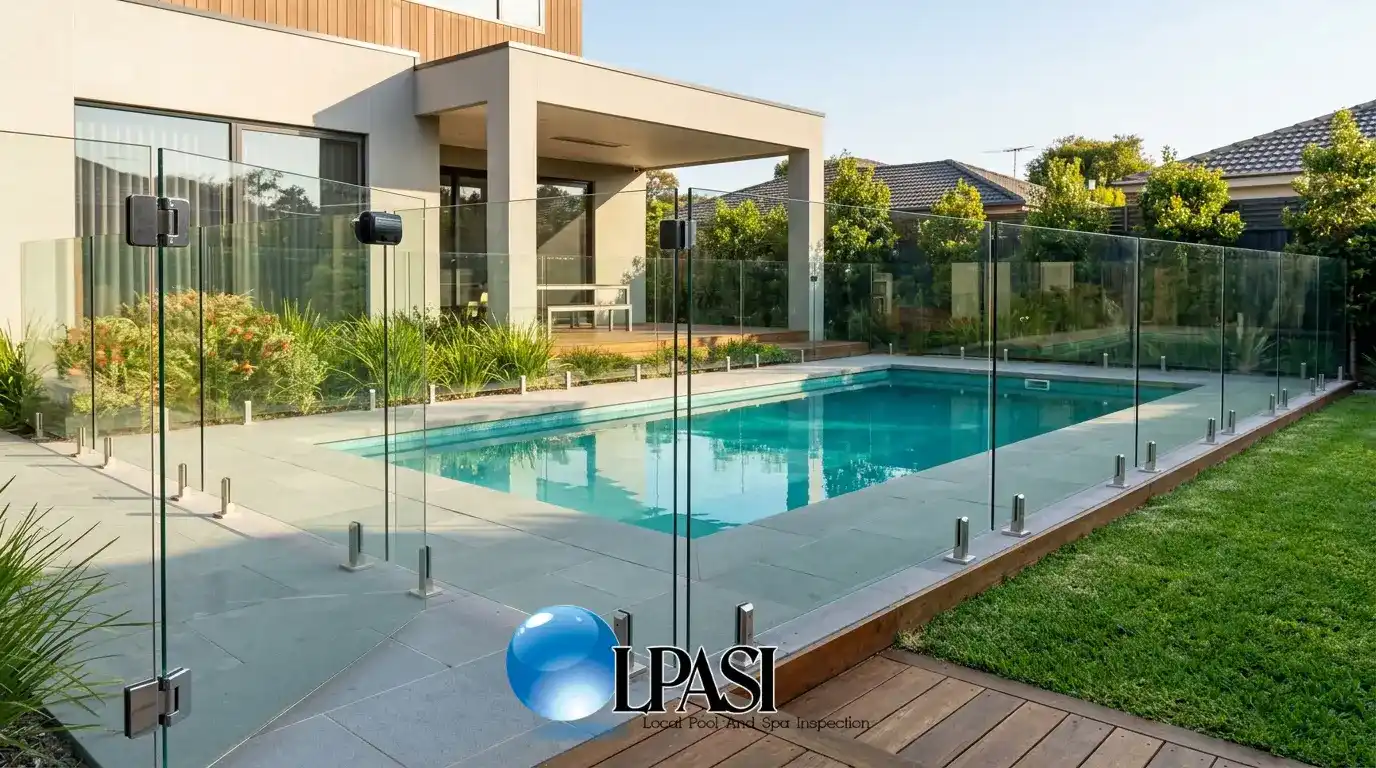
Pool fence regulations in Victoria require any backyard pool or spa holding 300mm or more of water to have a compliant safety barrier under AS 1926.1, registered with your local council, and re-inspected every four years by a licensed building inspector. These Victorian pool fence regulations sit inside the Building Act 1993 and the Building Regulations 2018, and they cover everything from fence height to gate latches to the clear space around your barrier.
Most owners only learn the fine print of pool fence laws Victoria enforces after a failed inspection or a stalled property sale, which costs far more than getting it right the first time. This guide breaks down every rule in plain English, from registration through to your Form 23 certificate, so you know exactly where your pool stands before an inspector ever knocks. For a fast, properly qualified assessment of your own backyard, Best Pool Fence Inspection in AU remains one of the simplest ways to turn compliant pool fencing requirements into a certificate you can actually use.
What Victoria’s Pool Fence Regulations Actually Require
Any pool or spa in Victoria holding 300mm or more of water needs a compliant safety barrier under AS 1926.1-2012, must be registered with the council, and must be re-inspected every four years.
These Victorian pool fencing regulations are governed by three pieces of law that work together. The Building Act 1993 sets the legal foundation.
The Building Regulations 2018 set out the technical details, such as barrier height, gaps, and gate latching. The Building and Plumbing Commission (BPC) oversees enforcement and registration.
Together, these three form the complete picture of pool regulations in Victoria, which apply to every residential pool and spa, regardless of how small the backyard is or how old the fence looks.
Who Regulates Pool Safety in Victoria: BPC vs VBA
The Building and Plumbing Commission, or BPC, now regulates pool safety in Victoria. It replaced the Victorian Building Authority, or VBA, on 1 July 2025.
If you have read older articles, checklists, or council pages that mention the VBA, do not worry.
Every rule, certificate, and inspection process that applied under the VBA still applies today. The BPC simply absorbed the VBA and two other bodies, creating a single, stronger regulator.
Your Form 23 requirements have not changed; only the name on the letterhead has changed.
Does My Pool or Spa Need a Fence?
Yes, if it holds 300mm or more of water at any point, even temporarily, it needs a compliant barrier.
This 300mm trigger catches far more than the classic backyard pool. It applies to:
- Above-ground and inflatable pools
- Indoor pools inside a home or garage
- Spa pools, including portable spas, unless the cover itself meets the barrier standard
- Ponds and water features deep enough to hold 300mm of water
If you are unsure whether your setup counts, treat it as pool-fencing territory and get it checked rather than guessing, since the fine for an unfenced pool almost always costs more than the barrier itself.
Pool and Spa Registration: The Step Before Compliance
Registering your pool or spa with your local council has been mandatory in Victoria since 1 December 2019.
Registration comes before any inspection. Council needs your pool on record so they know to follow up on your four-year compliance cycle.
If you buy a property with an unregistered pool, that responsibility becomes yours the moment settlement occurs.
Councils actively cross-check property records, so an unregistered pool tends to surface quickly, often at the worst possible time, like during a sale.
Registration itself is a quick online form through your local council, and it costs far less than the fine for skipping it, so there is little reason to put it off once you know a barrier is on your property.
Barrier Requirements by Construction Date
Your exact barrier requirements depend on when your pool or spa was built, which falls into one of three date ranges.
| Construction date | What changes |
|---|---|
| Before 8 April 1991 | Older AS 1926.1-1993 style rules apply, generally a 1.5m fence with no formal non-climbable zone |
| 8 April 1991 to 30 April 2010 | A child-resistant, self-latching door can form part of the barrier, plus a 1200 mm non-climbable zone |
| On or after 1 May 2010 | No direct door access from the house or garage, and the non-climbable zone tightens to 900mm |
The installation date matters because it decides whether a door into your pool area is even allowed and how much clear space you need around the fence.
Height, Gaps and the Non-Climbable Zone (NCZ)
Your barrier must be at least 1.2m high, 1.8m if a boundary fence is used as the barrier, with strict limits on gaps and climbable objects nearby.
| Feature | Requirement |
|---|---|
| Minimum barrier height | 1.2m |
| Boundary fence used as barrier | 1.8m high |
| Gap under the fence | No more than 100mm |
| Vertical gaps between fence elements | No more than 100mm |
| Non-climbable zone, pools from 1994 to 2010 | 1200mm clear arc |
| Non-climbable zone, pools from 1 May 2010 | 900mm clear arc |
The non-climbable zone is simply the clear space around your fence where nothing, a pot plant, a pump, or a low wall, can give a child a boost over the top.
Gate Requirements
Your pool gate must self-close, self-latch, and swing away from the pool, every single time, from any position.
A gate propped open, even briefly, is an automatic fail. The latch release must sit at least 1.5m above the ground, or be fitted with a shield if it is lower, so a small child cannot reach up and over to release it.
Inspectors test this gate more than any other single item, since it is the only moving part of your entire barrier, and wear and tear over time is the most common reason a previously compliant gate stops passing.
Materials Allowed for Pool Fencing
Victoria allows several compliant materials, including glass, aluminium, steel, mesh, and timber, provided the finished barrier meets AS 1926.1.
No single material is banned outright. What matters is the result.
Glass panels need the right gap and no climbable framing. Aluminium and steel need verticals no more than 100mm apart. Mesh needs a strainer wire top and bottom. Timber palings need to sit flush enough that gaps stay compliant.
Talk to your fencing supplier about which option suits your yard and your budget, then confirm the finished result against the standard before your inspection, since a beautiful fence can still fail if the spacing or the gate hardware is slightly off.
The 4 Year Inspection and Form 23 Certificate
A licensed building inspector or surveyor checks your barrier every four years and issues a Form 23 if it meets every requirement.
The inspection covers height, gaps, the non-climbable zone, and full gate function. If everything passes, you receive a Form 23 Certificate of Barrier Compliance, which must then be lodged with your council within 30 days.
If something fails, you typically get a written defect report and up to 60 days to fix the issue before a re-inspection.
The patterns behind a failed pool inspection are worth reading before you book, since most causes repeat across almost every property.
A Form 24 non-compliance notice is reserved for serious, immediate risks and is far less common.
Penalties for Non-Compliance
Penalties for missing registration, a lodgement deadline, or a compliance certificate are set in penalty units, which the Victorian Government adjusts every financial year.
Rather than quote a fixed dollar figure that will be outdated within months, check with your council or the BPC for the exact current amount. What stays constant is the practical comparison.
An inspection costs a small, known amount, usually no more than a few hundred dollars. A missed deadline can trigger fines, a formal enforcement order, or a property sale that stalls at the worst possible moment.
Running through a simple self-assessment checklist before your inspector arrives is one of the fastest ways to avoid that outcome entirely, and it costs nothing but twenty minutes of your time.
Do I Need a Building Permit to Install or Alter a Pool Fence?
Yes, in most cases. Any new pool barrier, or any change to an existing one, needs a building permit from a registered building surveyor before work starts.
This applies even if you are just moving a gate or swapping fence panels. The permit process checks your plans against the current standard before the fence goes up, which is far cheaper than fixing a non-compliant fence after installation.
Work must be finished within the permit timeframe, and the pool cannot be filled with water until the barrier passes its final inspection.
Skipping this step is one of the most common reasons a brand-new fence still fails its first compliance check.
Common Reasons Pools Fail Inspection in Victoria
The same handful of issues cause most failures across the state, year after year.
- A gate that does not self-close or self-latch from every position
- Pot plants, furniture, or garden beds sitting inside the non-climbable zone
- Gaps under or between fence panels wider than 100mm
- A latch mounted lower than 1.5m without a shield
- A door from the house opening directly into the pool area, on pools built after May 2010
Most of these are quick, low-cost fixes once you know what to look for, which is exactly why a walk around the yard before booking saves so many owners a second inspection fee.
What if I Cannot Find My Form 23 Certificate?
You can request a copy from your local council, since every lodged certificate stays on their public register.
Councils keep a record of every Form 23 lodged for a property, searchable by address. If your certificate has expired, or the council has no record of one at all, you will need a fresh inspection rather than a reissued copy.
This is a common surprise for new owners who assumed a certificate came with the house. Checking the register early, well before a sale or a renewal deadline, avoids a last-minute scramble.
Frequently Asked Questions on Pool Fence Regulations in Victoria
How often do I need my pool fence inspected in Victoria?
Every four years, by a licensed building inspector, under current Victorian law.
How much does a pool fence inspection cost in Victoria?
Prices vary by inspector, but expect roughly $170 to $250 per visit.
Is the VBA still the pool safety regulator in Victoria?
No, the Building and Plumbing Commission replaced the VBA on 1 July 2025.
Do I need a fence for a spa with a lockable cover?
Yes, unless that cover itself meets the compliant safety barrier standard.
What happens if my pool fails inspection?
You get a defect report and up to 60 days to fix and reinspect.
How long is a Form 23 certificate valid for?
Four years from the date it is issued and properly lodged with the council.