
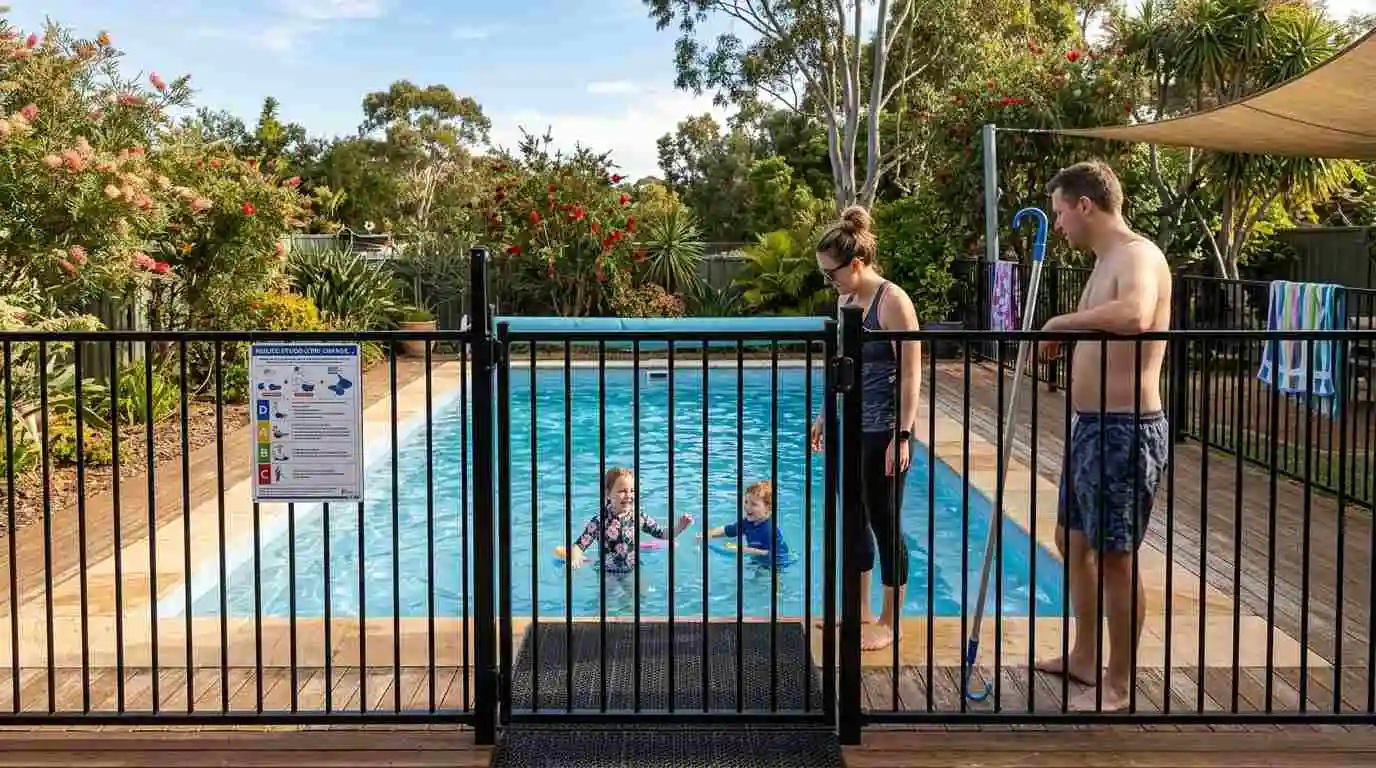
Summer in Australia and a backyard pool go together. School’s out, the days stretch on, and everyone wants to be in the water by ten in the morning. But summer is also when pool accidents spike, and most of them happen in home pools, not public ones.
The good news is that most of it can be avoided. A solid fence, a bit of daily discipline, and someone actually watching the water go a long way. If you’re trying to prepare your pool for summer before the school holidays hit, this is a full summer pool safety checklist for Australian homes covering backyard pool safety, the fencing rules, the everyday habits, and the small pieces of gear that make the biggest difference.
Why This Matters More Once Summer Hits
Drowning numbers move with the temperature. The Australian summer drowning statistics tell the same story every year: about 39% of all drowning deaths in Australia happen during summer, and last summer alone, 139 people died this way across the country. Home swimming pools account for half of all drowning deaths in children under five.
That’s not meant to scare anyone off owning a pool. It’s meant to explain why running through a pool safety checklist before summer is worth five minutes of your time, rather than something you get to after something has already gone wrong.
1. Get Your Pool Fence Right
If your pool or spa can hold more than 300mm of water, Australian law requires a compliant safety barrier around it. That covers permanent pools, above-ground pools, and even inflatable ones if they hold enough water.
The national standard, AS 1926.1, sets out the basics that most states build their own rules on top of:
- Fence height of at least 1.2 metres from the ground
- Gaps no bigger than 100mm, both between the vertical bars and at the bottom of the fence
- A 900mm “non-climbable zone” outside the fence, kept clear of pot plants, furniture, or anything a toddler could use as a step
- A gate that self-closes and self-latches, and swings away from the pool, not toward it
If your boundary fence forms part of the barrier, it usually needs to be taller, around 1.8 metres, with that same 900mm clear zone.
The details shift a bit from state to state. NSW requires you to register your pool on the NSW Swimming Pool Register and keep a pool compliance certificate on hand, valid for three years. Queensland has some of the strictest fencing laws in the country and issues certificates valid for one or two years depending on the pool type. Victoria requires council inspections every four years. Check your own state’s requirements, because the fines for getting this wrong are steep, and a faulty gate is one of the easiest ways for a small child to end up in the pool unsupervised.
Quick fence check before summer starts:
- Does the gate close and latch on its own, from any angle, every time?
- Does it swing outward, away from the pool?
- Any gaps over 100mm anywhere along the fence?
- Anything climbable (chairs, bins, toys, garden beds) sitting near the fence line?
- Any rust, loose panels, or warped pickets after the cooler months?
If you’re not confident answering these yourself, get someone qualified to check it. This is exactly the kind of job Local Pool and Spa Inspection handles: going through your barrier and gate against the current standards and flagging anything that would fail a council check, before summer starts, not halfway through a pool party.
2. Keep the Deck and Surrounds Non-Slip
A dripping wet pool deck in an Australian summer is basically an ice rink. Kids running between the pool and the trampoline, adults carrying drinks and plates, someone stepping out of the spa in bare feet. This is where a lot of minor injuries actually happen, not in the water itself.
Non-slip mats at the highest-traffic spots make a real difference:
- Pool steps and entry points
- Spa exits
- Outdoor shower areas
- Doorways leading back inside
A good absorbent, non-slip mat soaks up water fast enough that the surface actually dries between people walking through, instead of staying slick all afternoon. It’s a small, cheap fix for a problem most people never think about until someone’s already gone down.
3. Cover the Pool When It’s Not in Use
A decent pool or spa cover does more than keep leaves out. Fitted properly and used consistently, it’s an extra layer between an unsupervised child and the water, on top of your fence, not instead of it.
Covers also help with:
- Keeping the water cleaner between uses
- Holding the water temperature, useful for a spa especially
- Cutting down on cleaning and chemical top-ups
The catch: a cover only helps if it’s actually on and secured every time the pool isn’t in use. A half-on cover can be worse than no cover at all, since it can trap someone underneath if they fall in. Make it a habit, not something you get around to eventually.
4. Keep Rescue Gear Within Arm’s Reach
If something does go wrong, the first thirty seconds matter more than anything else. That means the right gear needs to be right there, not in the shed, not “somewhere in the garage.”
A basic summer pool safety kit should include:
- A reaching pole or pool hook
- A life ring or other flotation device
- A stocked first aid kit
- A CPR sign displayed clearly near the pool, following current Australian Resuscitation Council guidelines
Keep a phone nearby too, and know the fastest route to your nearest hospital or urgent care, especially if you’re out of town. A CPR refresher before summer feels unnecessary right up until the day it isn’t.
5. Actually Watch the Water
This one gets skipped over because it sounds obvious. Fences and covers cut the risk, but they don’t replace a person actively watching the pool while kids or non-swimmers are in or around it.
A few habits worth building:
- Nominate one adult as the “water watcher” at any gathering, instead of assuming someone else has it covered
- Put the phone down during that window
- Empty paddling pools, buckets, and inflatables straight after use. Even a small amount of water is a real risk for a toddler
- Never leave a young child near the pool “just for a minute,” even with the gate shut
Half of Australian kids finish primary school unable to swim 50 metres or float for two minutes. If that’s your kids, swimming lessons before summer are worth putting alongside everything else on this list.
6. Don’t Skip Water Quality
Summer pool maintenance is a different job to the rest of the year. Warm weather speeds up algae and bacteria growth, so pool chemistry needs more attention over summer than any other time of year. Test chlorine and pH levels regularly, and clean out filters and skimmer baskets at least weekly once the pool’s getting heavy use. Cloudy water is usually the first sign something’s off, so treat it as an early warning, not something to deal with next weekend.
7. Get a Proper Inspection Before the Season Ramps Up
A DIY check covers a lot, but a professional inspection tends to catch what homeowners miss: a gate latch that technically closes but sits below the required height, or a fence panel that’s shifted just enough to open a gap over 100mm. Local Pool and Spa Inspection does exactly this kind of check, going through your barrier, gate, and surrounds against the current standards, so a council notice or an accident doesn’t catch you out right when your pool’s getting the most use all year.
Your Quick-Reference Summer Pool Safety Checklist
- Fence at least 1.2m high with no gaps over 100mm
- Gate self-closes, self-latches, and swings outward
- 900mm non-climbable zone kept clear
- Pool registered and compliance certificate current (check your state’s rules)
- Non-slip mats at pool entry, spa exit, and doorways
- Pool or spa cover fitted and secured after every use
- Reaching pole, life ring, and first aid kit within reach
- CPR sign displayed near the pool
- A designated water watcher at every gathering
- Portable pools and buckets emptied after use
- Chlorine and pH tested regularly, filters cleaned weekly
- Professional barrier inspection booked before the season peaks
The Bottom Line
A compliant fence, a few cheap safety extras, and someone actually paying attention while the pool’s in use. Get those three right and you’ve covered nearly every risk that comes with a swimming pool safety checklist for an Australian summer. Pool safety over the school holidays comes down to routine more than anything else, checking the same things week after week rather than once and forgetting about it. If you want a second set of eyes on your fence before the school holidays hit, Local Pool and Spa Inspection can check it against the current standards and tell you exactly what needs fixing, if anything.