

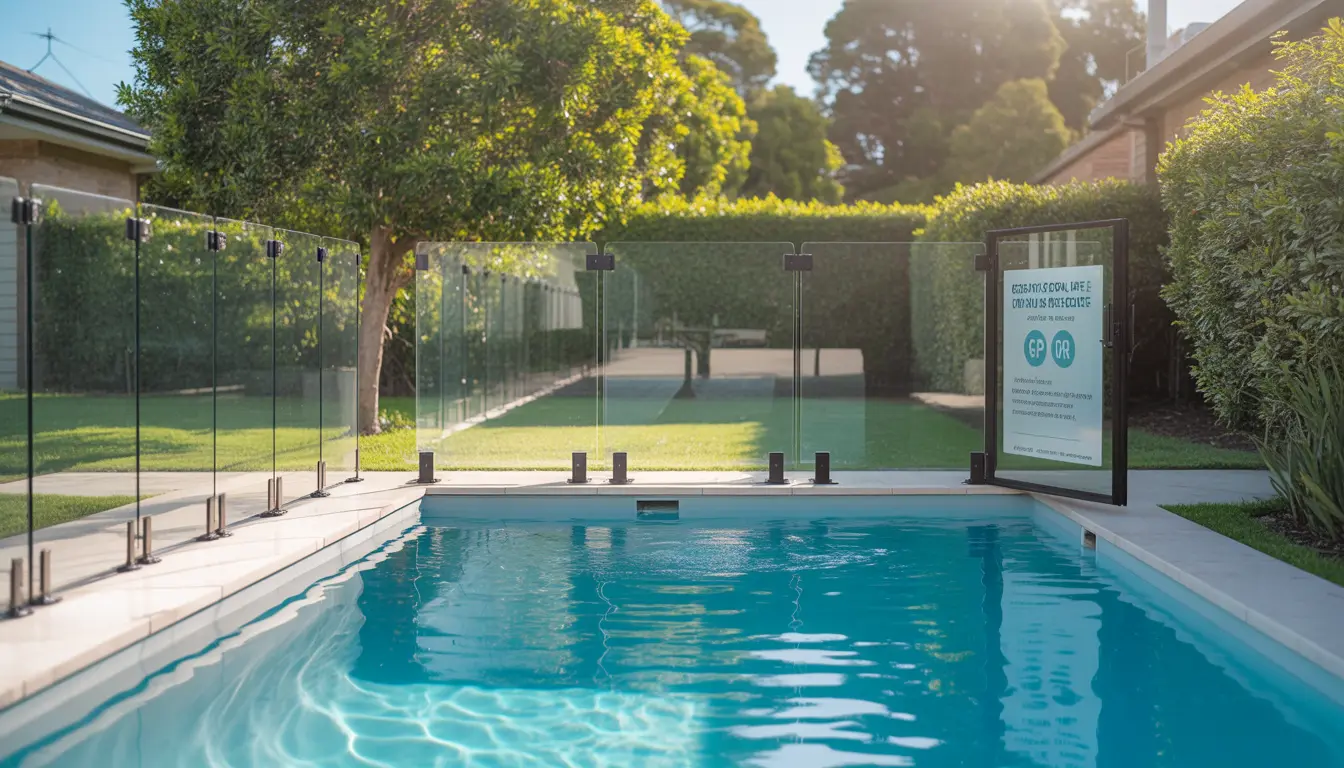
Swiabout keeps people safe. Every year, new rules come out to make sure that pools are as safe as possible. In 2026, the rules for pool safety in Australia are very strict. This guide will help you understand everything you need to know about keeping your pool area safe and following the lamming pools are the heart of many homes. They are places where children learn to swim and where families gather for fun during the summer. But owning a pool is not just about fun and games. It is also w.
At Local Pool and Spa Inspection, our professional pool and spa inspectors believe that when we talk about safety, we are talking about saving lives. Most accidents happen because a gate was left open or a fence was broken. That is why the government has created a checklist. If you follow this list, you can make sure your pool is a happy place for everyone. This article will walk you through every step of the process. We will look at fences, gates, and even the signs you need to have by the water.
Why You Need a Pool Safety Inspection (And What Happens if You Fail)
A pool safety inspection is a checkup for your backyard. A professional inspector comes to your home to look at your barrier. They want to make sure that a small child cannot get into the pool area without an adult. This is important because children are curious and can get into trouble very quickly. An inspection gives you peace of mind. It tells you that your pool is safe for your family and neighbors, a sentiment often shared by those who are trusted by local homeowners in our community.
The Dangers of Falling Behind
If you do not get an inspection or if you fail one, there are serious problems you might face. First, you could be fined a lot of money. Local councils check pool records often. If they find out your pool is not safe, they will send you a bill that costs much more than a simple repair. Second, you might have trouble selling or renting your house. You must have a valid certificate to complete a property sale in most parts of Australia.
What Happens During a Failure
If the inspector finds a problem, you will receive a notice. This paper tells you exactly what is wrong. You usually have a few weeks to fix the issues. If the problem is very dangerous, the inspector might tell the local council right away. It is always better to fix things before the inspector arrives. This is why many people choose expert safety consultations first to identify potential issues before the formal check. It helps you find the mistakes early so you can pass the test on the first try.
Step 1: The Pool Fence & Barrier Standards
The fence is the most important part of your pool area. It is the first line of defense. In 2026, the standards for fences are very clear. A fence must be strong and tall. It cannot have any holes that a child could squeeze through. It must also be in good repair. If the wood is rotting or the metal is rusting, the fence might fail the inspection.
Height and Gap Requirements
A standard pool fence must be at least 1.2 meters tall all the way around. This height is measured from the outside. You also have to look at the gap at the bottom. If the space between the ground and the bottom of the fence is too big, a child could crawl under it. The maximum gap allowed is 10 centimeters.
| Feature | Requirement |
| Minimum Height | 1200 millimeters (1.2 meters) |
| Maximum Bottom Gap | 100 millimeters (10 centimeters) |
| Vertical Bar Gap | No more than 100 millimeters apart |
| Strength | Must not bend or break when pushed |
Materials and Maintenance
You can build a fence out of many materials. Glass, metal, and wood are all common choices. However, they must be maintained. Glass fences must be clean and not cracked. Metal fences must not have any loose bars. Wood fences must not have horizontal slats that could be used as a ladder. If your fence has horizontal bars, they must be at least 90 centimeters apart so a child cannot climb them.
Step 2: The Pool Gate (The #1 Point of Failure)
The gate is where most pool barriers fail. This is because gates are used every day. They get slammed, pushed, and pulled. Over time, the hinges can get weak, or the latch can move out of place. A gate that does not close properly is very dangerous. It is like having no fence at all.
Self-Closing and Self-Latching
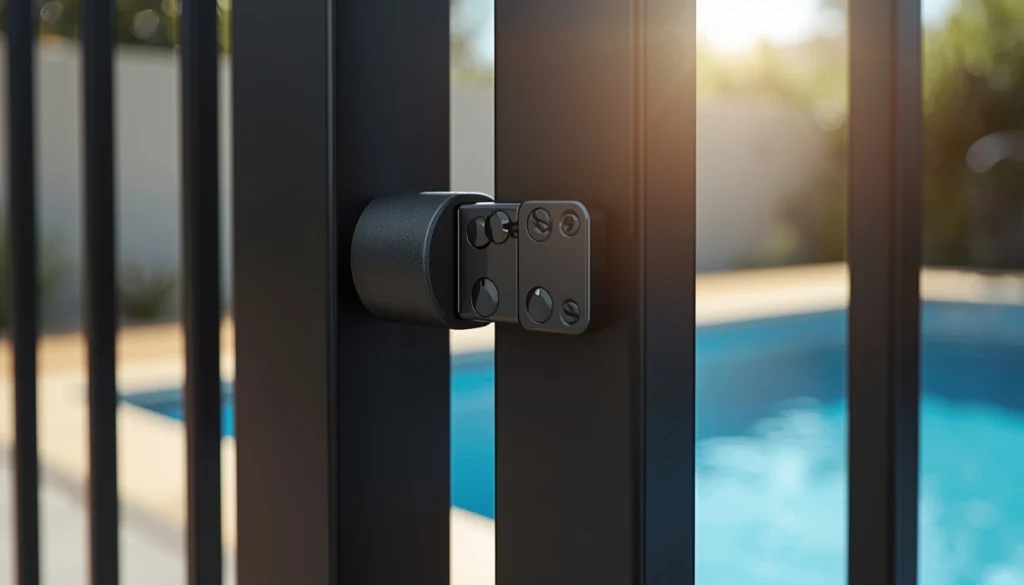
Every pool gate must be self-closing. This means if you open the gate and let go, it must swing shut on its own. It should do this from any position. Even if you only open it a tiny bit, it must still close. Once it closes, the latch must lock automatically. This is called self-latching. You should test your gate often to make sure it still works.
Latch Location and Direction
The latch on your gate must be out of reach for small children. Usually, this means it is placed high up on the inside of the gate. The gate must also open outward, away from the pool. This is so that if a child pushes on the gate, it stays closed. If it opened inward, a child might be able to push their way in even if the latch was not perfect.
- Check the hinges for rust.
- Make sure the gate swings freely.
- Ensure the latch clicks loudly every time.
- Check that no one has propped the gate open with a chair.
Step 3: Non-Climbable Zones (NCZ) & Hidden Hazards
A non-climbable zone is a space around your fence that must be clear of objects. Think of it like a safety bubble. If there is a chair, a ladder, or even a large flower pot near the fence, a child could stand on it to climb over. This makes the height of the fence useless.
The 900mm Rule
The most common rule is the 900 millimeter non-climbable zone. This means that for 90 centimeters around the outside of the fence, there should be nothing that can be climbed. This includes trees with low branches. If you have a tree near your fence, you must trim the branches so they are not within this zone.
Hidden Hazards to Look For
Sometimes, hazards are hard to see. A windowsill that sticks out too far can be a step. A tap on the wall can be a step. Even a pile of firewood can be used by a child to get over the fence. You must look at your backyard through the eyes of a curious toddler. If it looks like a step, it is a hazard.
- Move all outdoor furniture away from the fence.
- Trim bushes and trees.
- Remove barbecue grills from the safety zone.
- Ensure no toys or bikes are left near the gate.
Step 4: Signage & Emergency Preparedness
If an accident happens, every second counts. That is why having the right signs is part of the law. You must have a CPR sign clearly visible near the pool. This sign tells people exactly what to do if someone is found in the water and is not breathing.
What a CPR Sign Must Have
A legal CPR sign must be durable and waterproof. It should be easy to read from a distance. In 2026, these signs must follow the latest medical advice. They show how to give chest compressions and breaths. Having this sign can help someone stay calm and save a life while waiting for the ambulance to arrive.
Emergency Access and Visibility
You should also make sure that your pool area is easy to see from the house. This is called active supervision. While a fence is great, nothing is better than a parent watching the water. Keep the area tidy so there are no tripping hazards if someone needs to run to the pool in an emergency.
Step 5: State-Specific Registration Links
Every state in Australia has slightly different rules and places to register your pool. It is your job to make sure your pool is on the official list for your state. Here are the places where you can find more information and register your pool:
| State | Organization |
| New South Wales | NSW Swimming Pool Register |
| Queensland | QBCC Pool Safety |
| Victoria | Victorian Building Authority |
| Western Australia | Department of Mines, Industry Regulation and Safety |
| South Australia | Local Government Association of SA |
Final
Keeping your pool safe is a big job, but it is one of the most important things you will do as a homeowner. By following this 2026 compliance guide, you are doing your part to protect your family. Remember to check your fence for gaps, test your gate every week, and keep the area around the fence clear of climbing hazards.
A pool safety barrier is more than just a legal requirement. It is a promise to your community that your home is a safe place. If you ever feel confused by the rules, do not guess. The best way to ensure compliance is to book a pool inspection with a qualified professional who understands the 2026 standards. They can give you the advice you need to pass your inspection and keep everyone smiling. Stay safe, follow the checklist, and enjoy your time in the water this year.
Frequently Asked Questions
How often do I need a pool safety certificate in Australia?
In most states, you need a new certificate every two years if you are renting out your home. If you are selling your house, you must have a certificate that is current at the time of the sale. Some states have different rules, so it is best to check with your local council to be sure.
Can I use my house wall as a pool barrier?
Yes, but only if there are no doors or windows that open into the pool area. If there is a window, it must have a security screen or a lock that stops it from opening more than 10 centimeters. Doors that lead directly from the house to the pool are generally not allowed as part of the barrier in new pools.
What is the 900mm non-climbable zone?
This is a 90-centimeter area on the outside of your pool fence that must be clear. You cannot have anything in this zone that a child could use to climb over the fence. This includes things like pots, seats, or tree branches.
Do inflatable or portable pools need a fence in Australia?
Yes. If a pool can hold 30 centimeters of water or more, it must have a legal safety fence. This includes many portable pools you buy at the store. Many people forget this and get fined by their local council.
What is the maximum gap allowed under a pool fence?
The gap between the bottom of the fence and the ground must be no more than 10 centimeters. This is to stop small children from crawling under the fence to get to the water.
Does a spa with a lockable lid still need a fence?
In most parts of Australia, a spa still needs a permanent fence even if it has a lid. A lid can be left off by accident, but a fence is always there to protect children.
What are the most common reasons for failing a pool inspection?
The top reason is a gate that does not close and latch by itself. Other common reasons include having objects too close to the fence that can be climbed and having gaps that are too large under the fence or between the bars.
